

Industrial machine vision has become the backbone of modern manufacturing, quality control, and automated inspection. From semiconductor fabrication to food packaging lines, the demand for cameras that deliver consistent, high-resolution imaging under real-world conditions has never been higher. Choosing the wrong camera doesn't just affect image quality — it can slow production cycles, inflate integration costs, and create long-term maintenance problems.
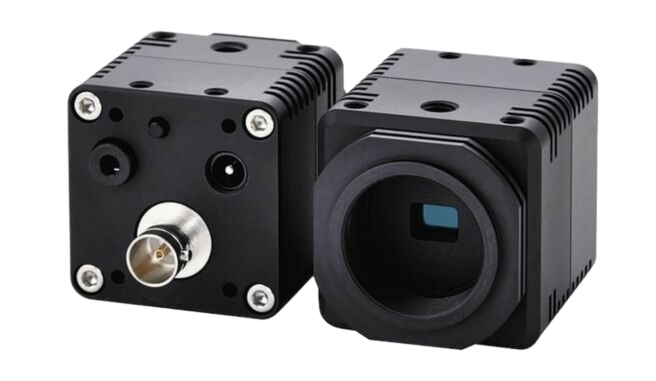
The Omron STC-HD213 Series is a family of Full HD industrial cameras built to address this challenge head-on. Rather than a one-size-fits-all solution, Omron engineered a range of closely related variants sharing the same high-performance imaging core but differing in interface type, lens mount, and form factor. This guide walks you through every model, its strengths, and exactly which applications each one is built for.
What Makes the STC-HD213 Series Stand Out?
All HD213 cameras share a powerful common foundation that sets the series apart from competing platforms:
- 1/3-inch Full HD CMOS sensor delivering 1920 × 1080 resolution at up to 60 fps
- Global shutter — all pixels captured simultaneously, eliminating rolling shutter distortion on moving objects
- Compact, ruggedized housing designed to withstand industrial vibration, dust, and temperature variation
- CE and RoHS compliant across the entire product family
- Cross-platform SDK support for both Windows and Linux environments
- Onboard image processing with flexible exposure control and low-latency output
The series draws on Omron's Sentech engineering heritage, delivering reliable thermal management and a mature software ecosystem. For a deep technical breakdown of the core architecture, check out our earlier guide on the STC-HD213DV, it covers the baseline specifications in full detail.
HD213 Series Lineup — Every Model, Every Use, Made Simple
1. STC-HD213DV — The All-Purpose DVI Workhorse
The STC-HD213DV is the standard entry point into the HD213 family and the most widely deployed model across general industrial vision applications. It delivers Full HD video over a DVI output — one of the most universally supported interfaces in industrial imaging infrastructure.
Best suited for:
- Automated optical inspection (AOI) systems
- Laboratory imaging and research setups
- Quality control stations with close-proximity capture hardware
- General factory vision deployments with existing DVI infrastructure
Key benefits:
- Uncompressed signal ensures zero image degradation between camera and receiver
- Plug-and-play compatibility with a wide range of frame grabbers and industrial monitors
- Mature driver ecosystem with proven long-term stability
- Low integration complexity — ideal for teams deploying quickly
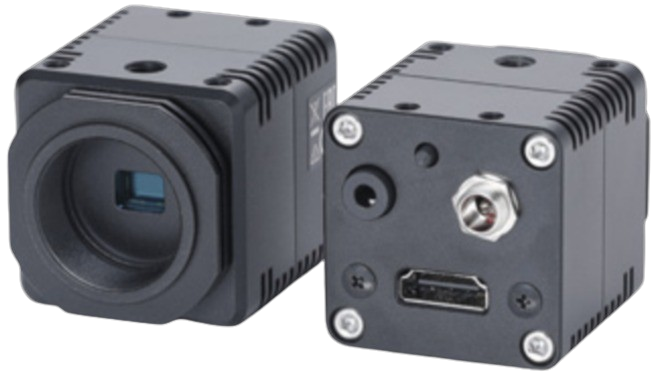
2. STC-HD213DV-CS — DVI with Interchangeable Optics
The STC-HD213DV-CS shares the same DVI interface and imaging sensor as the standard DV model but replaces the fixed lens mount with a C/CS-mount interface. This opens up access to hundreds of compatible industrial lenses from leading manufacturers.
Best suited for:
- Multi-station production lines with varying inspection distances
- Labs handling different product types requiring different fields of view
- Integrators who need one camera body to serve multiple optical configurations
Key benefits:
- Compatible with the entire C-mount lens ecosystem — wide-angle, telephoto, macro, and zoom
- CS-mount adapter extends compatibility to shorter back-focal-distance lenses
- Reduces the number of different camera models needed across an installation
- Maintains full DVI signal performance regardless of lens choice
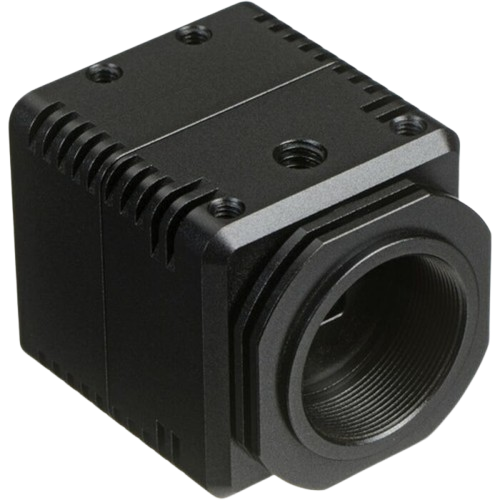
3. STC-HD213DVN — Optimized for Near-Infrared Imaging
The STC-HD213DVN introduces enhanced near-infrared (NIR) sensitivity. While retaining the same DVI output and HD resolution, the sensor is specifically optimized to respond to wavelengths in the 700–900nm range — well beyond what standard visible-light cameras can reliably detect.
Best suited for:
- Semiconductor wafer and PCB surface inspection under IR illumination
- Pharmaceutical tablet and coating analysis
- Biomedical imaging workflows using IR light sources
- Factory environments with highly variable or problematic ambient lighting
Key benefits:
- IR illumination eliminates ambient light interference for more repeatable results
- Improved contrast on features invisible under standard visible light
- Runs on the same integration infrastructure as the rest of the HD213 family
- Reduces system complexity by avoiding the need for a separate specialist camera platform
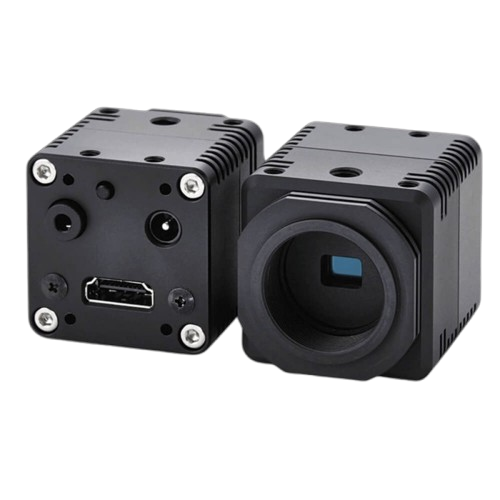
4. STC-HD213DVN-B — NIR Performance in a Bare Board Format
The STC-HD213DVN-B takes the NIR-enhanced imaging of the DVN and delivers it in a bare board (board-level) form factor. The outer housing is removed entirely, leaving the core PCB assembly for direct integration into custom hardware designs.
Best suited for:
- OEM medical device and diagnostic equipment manufacturing
- Drone-mounted and aerial inspection systems
- Robotics platforms with tight spatial constraints
- Custom portable or handheld inspection tools
Key benefits:
- Minimum footprint and weight — ideal for space-critical designs
- Full freedom to design custom enclosures, thermal management, and connector routing
- Delivers complete NIR imaging capability with no physical housing constraints
- Most design-flexible option in the entire HD213 lineup
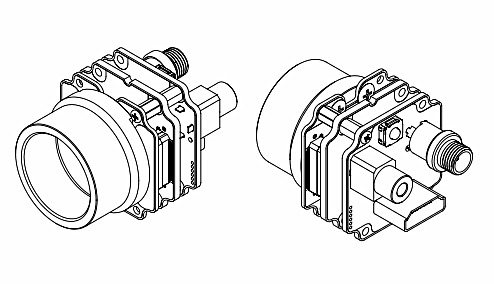
5. STC-HD213SDI — HD-SDI for Long-Distance and Broadcast Applications
The STC-HD213SDI adopts an HD-SDI (High Definition Serial Digital Interface) output — the broadcast industry's established standard for professional video transmission. This fundamentally changes the deployment possibilities for the camera, removing the distance constraints that limit DVI-based setups.
Best suited for:
- Large factory floor and warehouse monitoring systems
- Stadium, arena, and large-venue surveillance
- Broadcast production and live event video capture
- Any installation where camera and recording hardware are separated by significant distances
Key benefits:
- Transmits uncompressed 1080p video over 100+ meters of standard 75-ohm coaxial cable
- No active repeaters or signal boosters required for long runs
- Natively compatible with professional SDI-capable video switchers, capture cards, and recorders
- Eliminates the infrastructure limitations that make DVI impractical in large installations
How to Choose the Right Variant
Not sure which model fits your project? Use this simple decision framework:
Step 1 — Identify your interface requirement:
- Close-range setup with DVI infrastructure → choose from the DV range
- Long cable runs or broadcast ecosystem → choose from the SDI range
Step 2 — Determine your spectral needs:
- Standard visible-light imaging → DV or SDI base models
- IR illumination or NIR sensitivity required → DVN or DVN-B
Step 3 — Assess your physical integration constraints:
- Standard self-contained camera → DV or SDI base models
- Optics flexibility across varied setups → DV-CS or SDI-CS
- Custom enclosure / OEM embedded design → DVN-B
Following these three steps will narrow your choice to a single model in nearly every application scenario.
Conclusion
The Omron STC-HD213 Series is a masterclass in purposeful product design. Every variant is a deliberate response to specific real-world engineering requirements — not just a spec bump or cosmetic variation. The shared imaging core guarantees consistent, high-quality output across all models, while the differentiation in interface, optics, and form factor ensures each variant is genuinely optimized for the applications it targets.
For engineers and procurement teams looking to source the right HD213 model, Aegis Electronic Group Inc is the specialist partner you need. With deep product knowledge across the full Omron Sentech range, competitive pricing, and dedicated technical support, Aegis takes the guesswork out of camera selection and system integration. Whether you're equipping a single inspection station or building out a multi-camera production monitoring system, the Aegis team will help you identify the right variant, validate compatibility, and get your imaging system performing from day one.
Frequently Asked Questions
Q1: What is the STC-HD213DV best used for?
It is ideal for automated optical inspection, laboratory imaging, and quality control stations that use standard DVI infrastructure.
Q2: What makes the STC-HD213DV-CS different from the standard DV model?
It adds a C/CS-mount lens interface, giving engineers the flexibility to swap optics for different fields of view and working distances.
Q3: Which applications benefit most from the STC-HD213DVN's NIR sensitivity?
It is best suited for PCB inspection, semiconductor wafer analysis, and pharmaceutical imaging where IR illumination is used to eliminate ambient light interference.
Q4: Why would an OEM choose the STC-HD213DVN-B over a standard housed camera?
Its bare board format offers maximum design freedom, allowing direct integration into custom enclosures with minimal footprint and weight.
Q5: How far can the STC-HD213SDI transmit video without signal loss?
It delivers uncompressed 1080p video over 100+ meters of standard coaxial cable with no active repeaters required.
